Finally Sound Like Yourself in American
I help Successful Experts with strong foreign accents finally sound like themselves in American.
With the same Hollywood Accent Techniques I used to successfully change my own accent within 18 months.
FREE
Accent Archetype Quiz

Why Speaking More Won't Fix Your Accent
Short Explanation
Fixing any problems requires awareness, not just endlessly repeating the same mistakes. If you don't know what you're doing wrong, how could you possibly fix it?
Longer explanation
I don't entirely disagree that speaking more is important. It is.
It's just that in the context of changing our strong foreign accents, this alone will not get you a lot of results. Unless you have acquired knowledge, skills and habits first.
Why do I say that?
After all, even Americans will sometimes say (or rather claim in most cases) that they traveled to Australia, for example, and they "totally picked up the accent". Can't us foreigners do the same thing?
I mean, in theory, maybe?
In my experience, having had clients that moved to the U.S. at as young as 4 years old (!!), just being here and speaking isn't enough. Even for children.
I've also worked with lots of people that didn't move here as kids but they have lived in the U.S. for over twenty years and they still have a very strong accent.
There are outliers that will just soak up the American accent like a sponge. Unfortunately, you are probably not one of them.
I wasn't either if that makes you feel any better.
I was really good at English in school (meaning at grammar and vocabulary). When I came to the U.S., I thought I had a pretty good, clear, neutral accent.
Boy was I wrong. I still remember how frustrating that felt.
And back then, if all I had done was just live in the U.S. and just speak to Americans all day, my accent would have improved slightly. Or worse, I would have simply continued speaking the same way.
Why? Because I simply had no idea what I was doing wrong.
My teachers in high school never taught me anything about proper sound mechanics, rhythm, intonation, linking, proper sound mechanics, etc.
Speaking isn't a fix because it doesn't address the root of the problem: Not knowing what you're doing wrong.
I break my method down into three steps: UDS - Understand - Drill - Simulate
If you're reading this, you need the U step: understand
Because if you don't know what you're doing wrong... how could you possibly fix it?
Okay. So we're on the same page now. You need to understand.
How do you do that? And then how do you actually manage to apply that knowledge to change your accent?
Well, you have these 3 options:
Try to figure that out yourself by watching lots of videos on YouTube
Use an AI app to give you feedback
Hire a professional
(Some people will ask their American friends/colleagues for feedback. I do not recommend this. Native speakers are not aware of how they are speaking. They will (for the most part) give you useless answers. At least, that was my own personal experience when I was reducing my own accent.)
Here are my thoughts on these 3 options:
Figure it out yourself
Pros:
✅ Technically free (no direct cost)
✅ Flexible schedule — learn at your own pace
✅ Great for self-starters who enjoy independent problem-solving
Cons:
❌ Slowest route — can take years of trial and error
❌ Risk of fossilizing errors — if you repeat mistakes, they become habits
❌ Your ear isn't trained — hard to self-correct without a trained listener
❌ Low accountability — nobody tracks your progress
❌ No feedback loop — you don’t know what’s working
❌ No community — learning alone makes consistency harder
❌ Information overload — hard to know what to focus on or who to trust
❌ May still require a coach later — once you hit a plateau
AI Apps
Pros:
✅ Affordable (lower upfront cost than private coaching)
✅ Some feedback is better than none
✅ Convenient — practice on your own time
✅ Gamified apps can help maintain short-term motivation
Cons:
❌ Inaccurate feedback — AI misfires, especially on nuance (prosody, rhythm, placement)
❌ No emotional intelligence — AI doesn’t understand frustration or overwhelm
❌ No structured curriculum — no clear learning arc or system
❌ No human ears = no real conversation skills
❌ No accountability or support — same problem as learning solo
❌ Limited personalization — same drills for everyone, regardless of level or native language
❌ Most clients plateau after initial gains — you’ll likely need human guidance eventually
Hire a professional
Pros:
✅ Fastest, most effective route
✅ Live feedback — identify and fix problems in real time
✅ Tailored strategy — based on your voice, goals, and native language
✅ Accountability — regular check-ins ensure consistency
✅ You save time and frustration
✅ Better ROI — less time = faster transformation = sooner results
Specifically when working with me in my Accent Change Program:
✅ Learn from someone who’s walked the path — I'm an immigrant just like yourself and I know what it takes to change your accent first-hand.
✅ Community — Gives social motivation + peer learning, gamification, and accountability.
✅ Practice under pressure — simulations that draw on my acting training to build real-world confidence and pressure test the skills and habits we're building.
Cons:
❌ Higher cost upfront
When I was working on my own strong foreign accent, I had the luck of being enrolled in acting school. We got to work with coaches both in 1-on-1 classes and in group classes. I was told exactly what I was doing wrong which gave me the jumping off point that I needed to change my accent.
If you let me, I'll do the same for you.
I'm currently offering free accent assessments for new clients that want to change their accent and overcome what I call the "accent barrier" (as opposed to the language barrier).
All you have to do is fill out a quick application (takes about 3mins) to make sure we're a good fit.
➡️ Click Here to Apply for your Free Accent Assessment ⬅️
(Value: $200)

About my Method
The most common thing I encounter when I work with clients that have worked with other coaches before is this:
They have lots of theoretical knowledge.
But: they're not actually able to apply it well while speaking.
Theoretical knowledge is important but does not equate to actual skill.
I call my way of approaching accent reduction the UDS Method.
This stands for: Understand - Drill - Simulate
Pretty simple. All three steps are equally important.
Think of a three legged stool. You remove one leg, it falls over.
Understand = that's the easiest and fastest part. You can easily go and look up any American sound on YouTube right now to understand how it works very quickly. The difficult part is being able to implement this knowledge into the way you speak.
Drill = an incredibly important step where most people fall short. They think just understanding and then immediately trying to jump into speaking is how they will get to their goal. Based on many, many, many classes with clients I can confidently tell you this simply doesn't work. For most people, in an actual conversation, there's too much going on at the same time for you to adequately catch the sounds. You need to build habits first. This is the goal of the drill step.
Simulate = This is where I use my acting training to help you get to your goal. This is basically "roleplaying" in more advanced scenarios (scripted and improvised) to make sure that we truly pressure test the habits you have built in the previous step (drill). This is by far the hardest step and requires us to have done really solid work in the first two steps. As a result, you will fail a lot in this step. This is good. Because it exposes your weak points and shows you what you need to drill more.
Frequently Asked Questions
The most common questions around changing your accent in one place.
How long does it take to transform your accent?
It all depends on the method you're using. Self-study, choosing cheap options like AI apps.. those take a long time to bring about any meaningful change.
However, working with someone that has actually transformed their own accent and uses a time proven system to help others do the same? That gets you results much faster. I use the same methods actors like Daniel Day-Lewis and Christian Bale use to prepare for movie roles.
Now, all I can do is lay out the path. It's up to you to take the necessary steps. All I can do is show you what to do, why to do it, when to do it, and how to do it. If you take consistent action, practice with intention and show up for yourself and your goals, you can make progress very quickly.
You could be speaking very differently in a matter of just a few months. You could be speaking clearly and confidently. If you put in the work and follow the path.
Why should I learn from you?
If you had to go to the gym and get jacked, and you could choose between two trainers, who would you pick?
#1: an exercise scientist that has thin, spindly arms and legs
#2: an exercise scientist that is in excellent physical shape and health
Obviously #2.
Why? Because having actually done the thing matters.
I used to be in your exact situation. I came to the US with a strong accent that was a major obstacle to my goals. I put in the hours. I did the work.
On top of that, the methods I use are not just theory thought up by some linguists that have never worked with a person 1-on-1.
I studied the craft of acting at the William Esper Studio in New York City. The methods I use are actively being used by actors to prepare for big roles.
What about your method is different from other coaches?
I've had lots of clients come to me after studying with other coaches or after having purchased courses that didn't work for them. Do you know why?
Because what most people focus on most is the acquisition of knowledge, not actual skill.
This is why they (and probably you if you're reading this) get stuck in a specific spot: you know a lot of things about the American accent but you're not able to consistently apply that knowledge in a live situation.
This is why my method focuses on habit building. We need to get you so good, so comfortable with what you're learning that you are able to go into a high stakes situation (e.g. sales pitches, meetings, presentations, product demos) and focus on the ideas you're trying to communicate. Not feel self conscious about the way you speak.
I'm from [insert country], have you ever worked with somebody like me before?
Odds are, I have. However, I haven't worked with someone from every single country on earth so it's perfectly possible that I have not worked with somebody of your nationality before.
The process of transforming your accent is the same, regardless of your native accent. The things that will differ are the mistakes you are making.
The process to fixing those mistakes is always the same:
-understand what the mistake is
-understand how to make the correct sound
-drill the correct sound to build habits
-simulate live situations to pressure test those habits
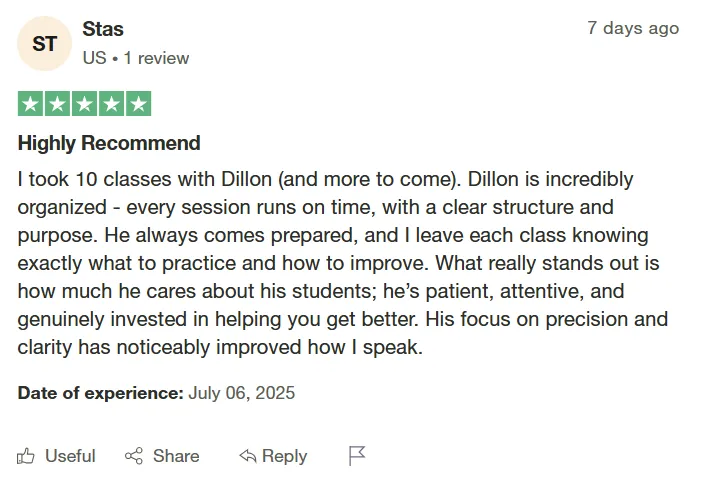
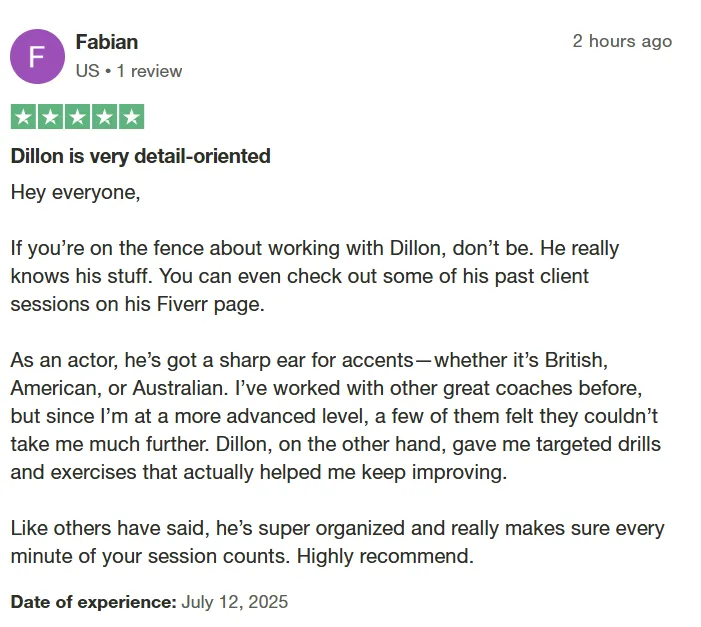
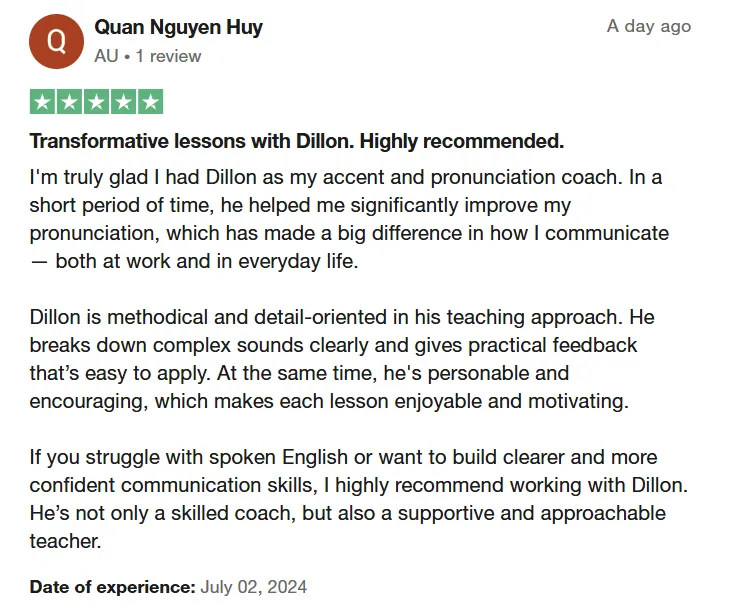
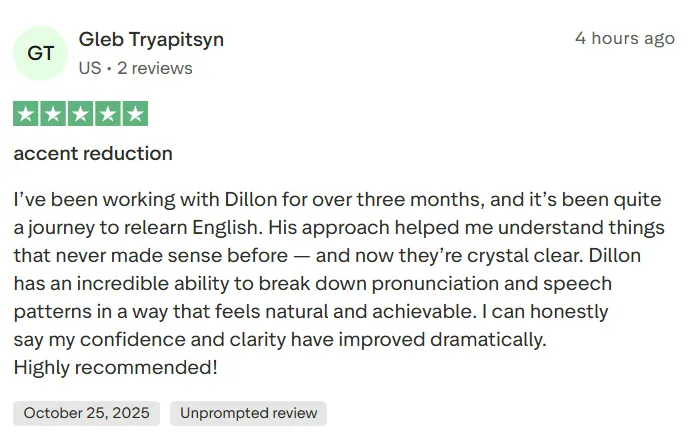
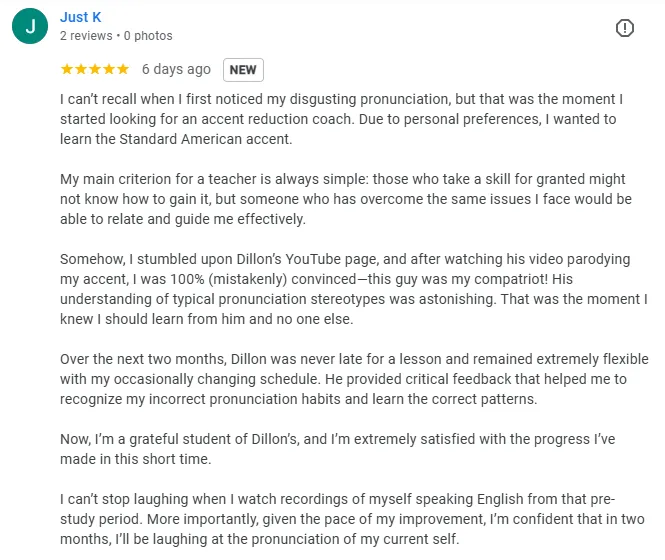
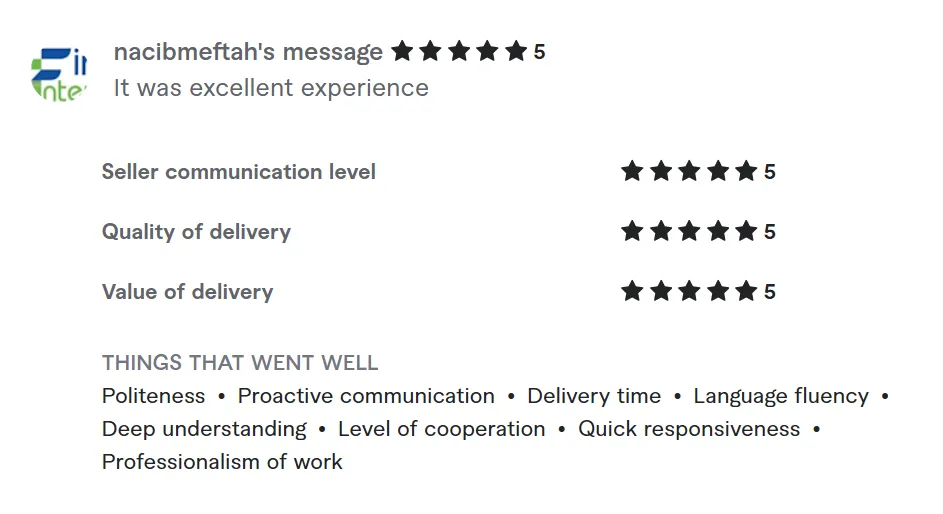
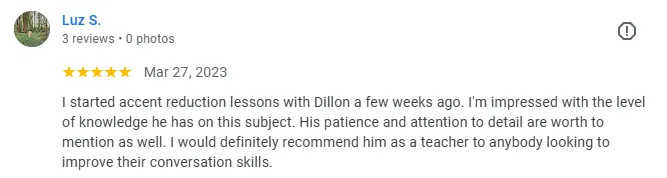
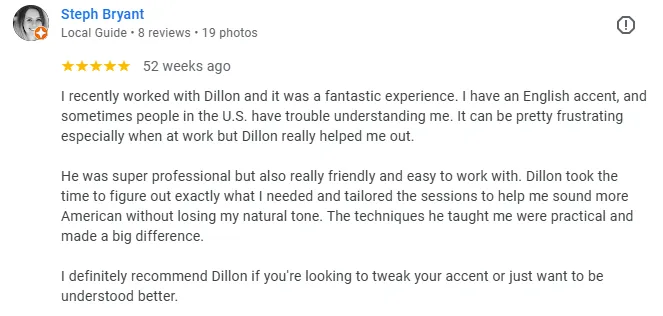
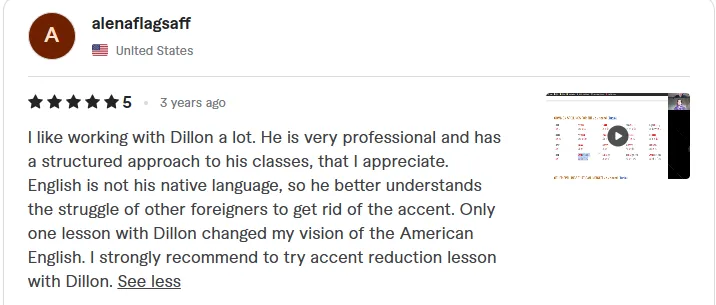
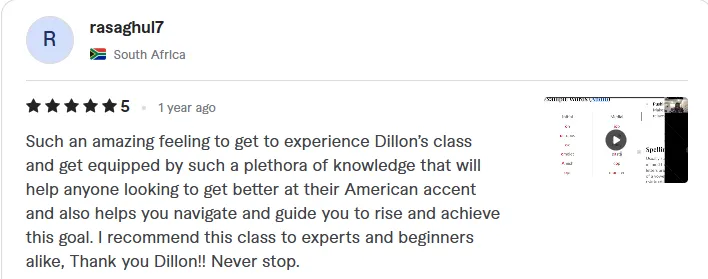
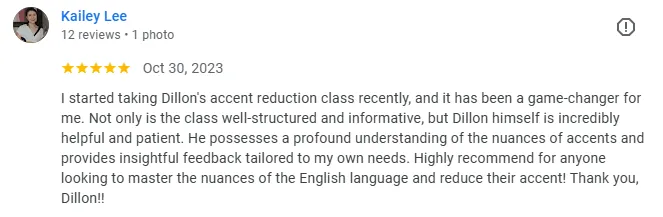
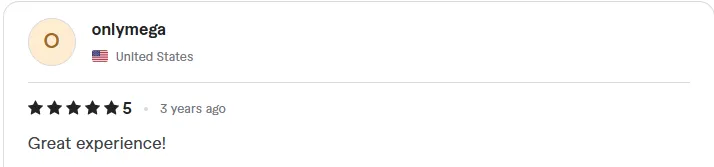
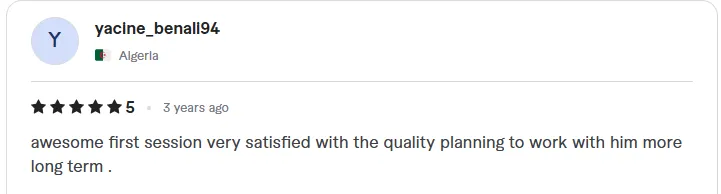
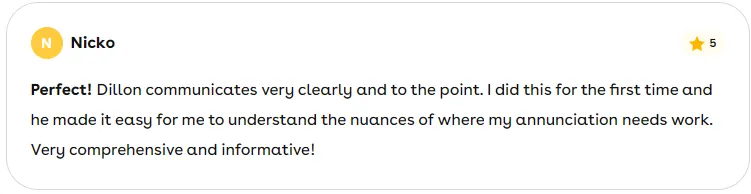
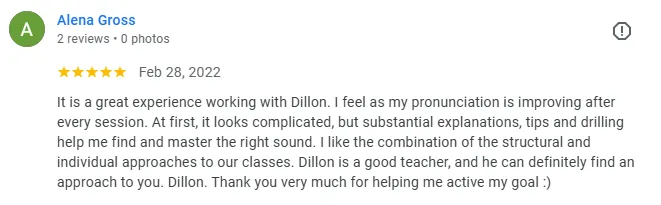
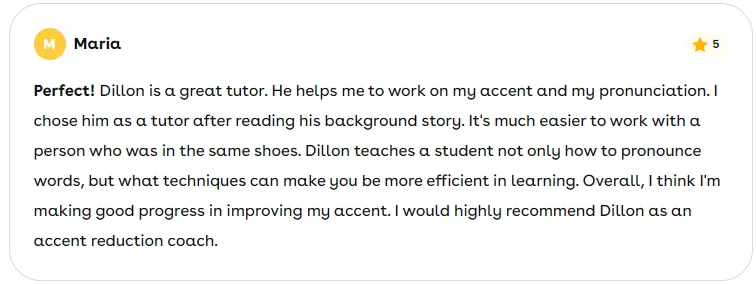
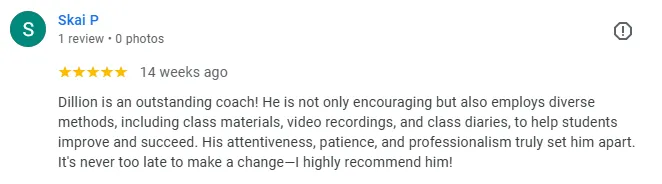
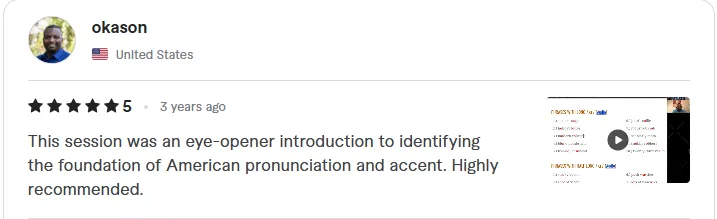
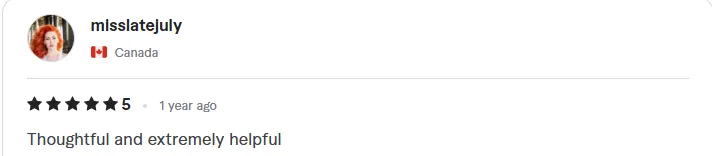
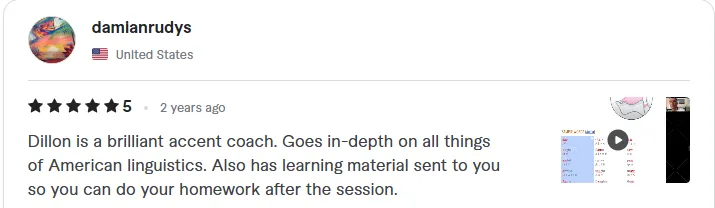
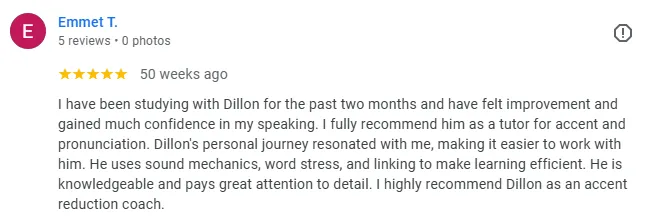
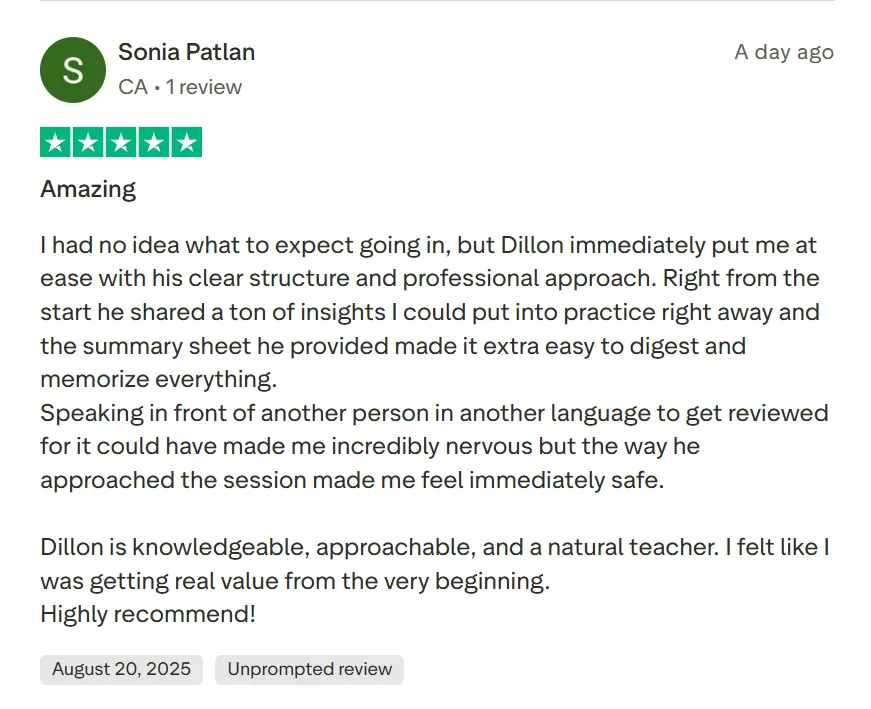
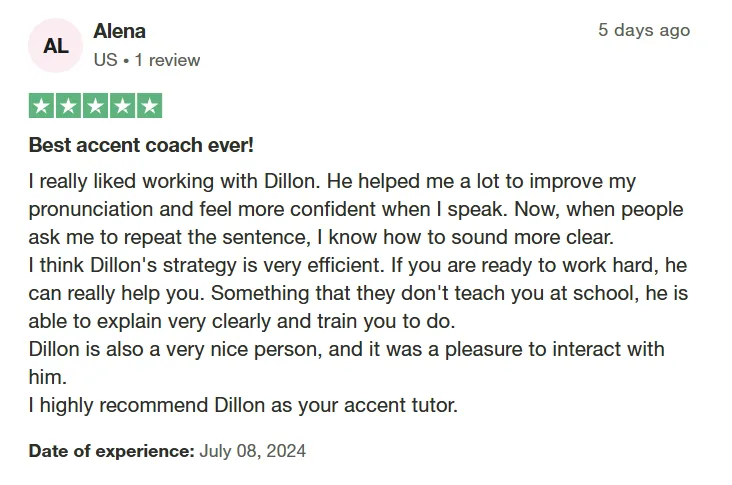
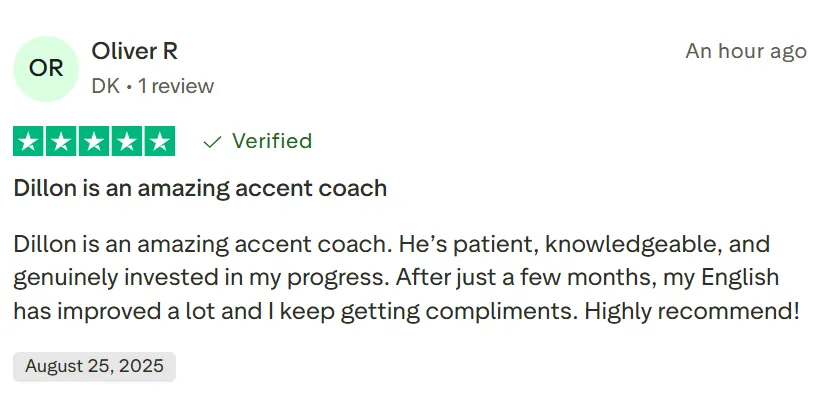
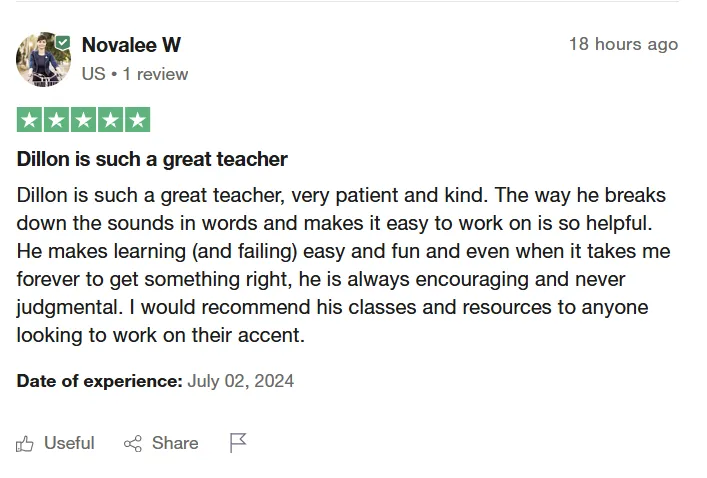
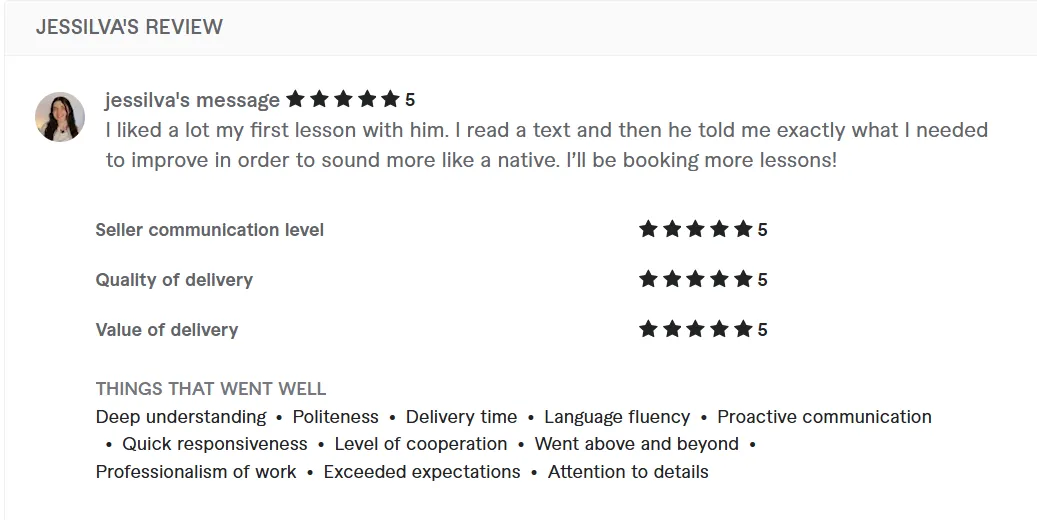
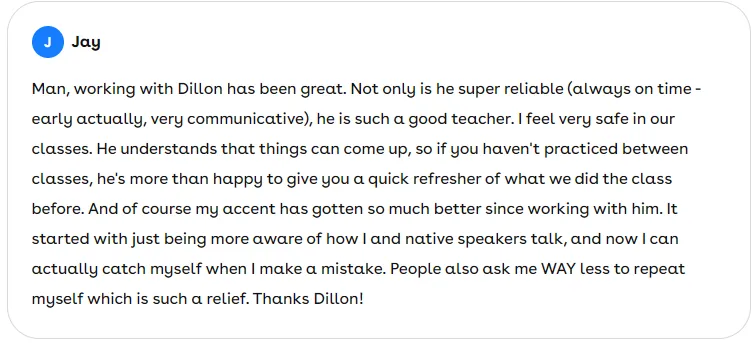
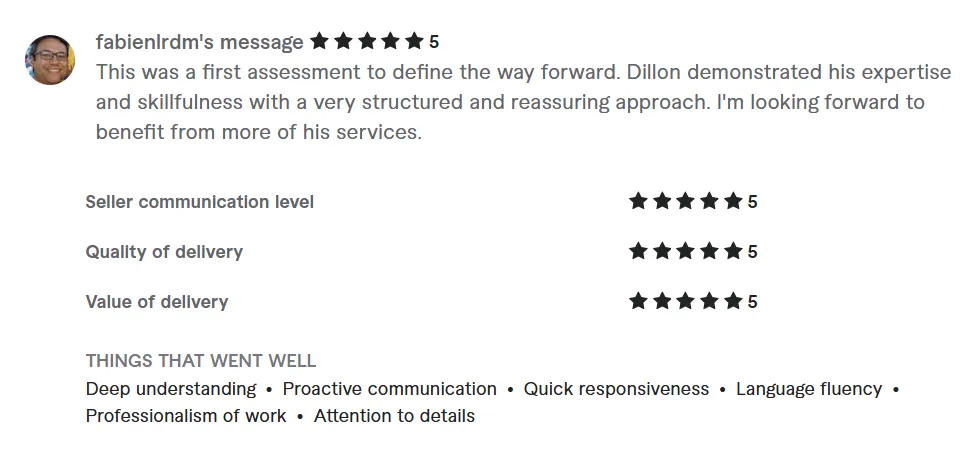
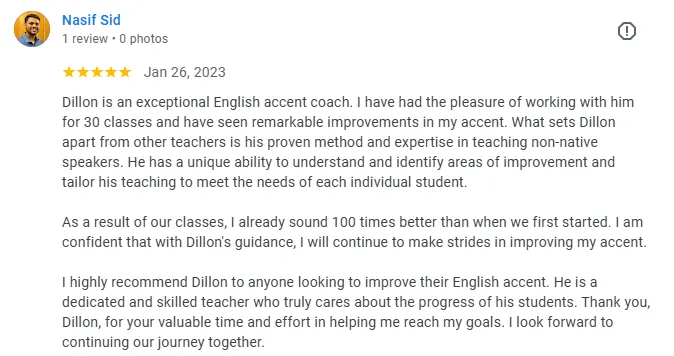
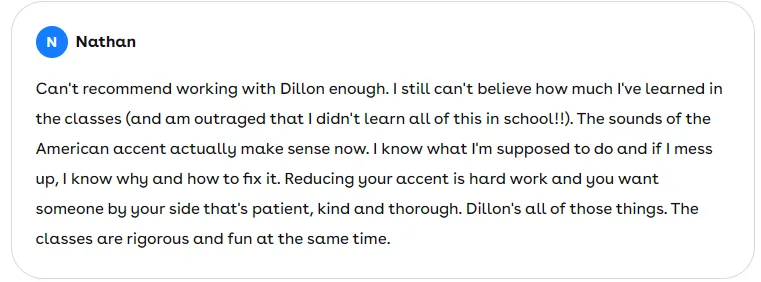
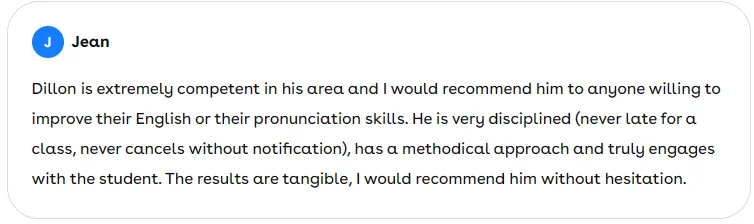
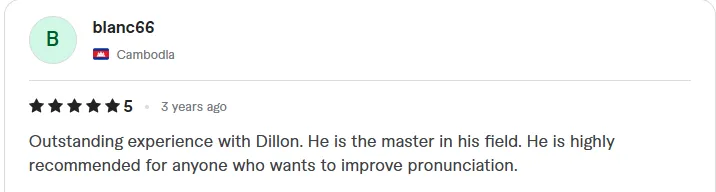
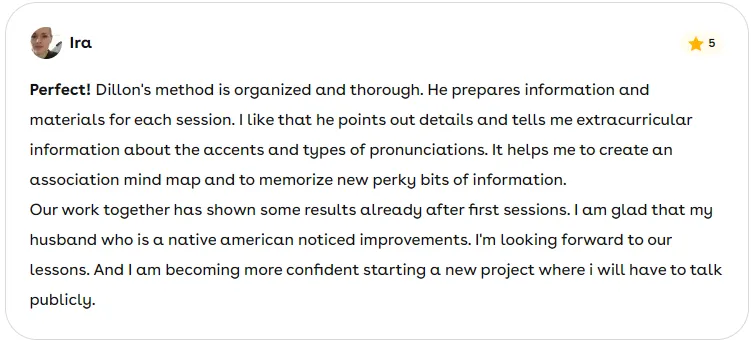
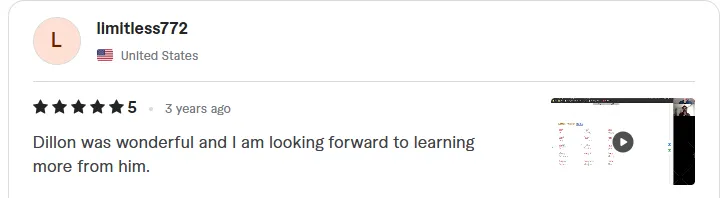
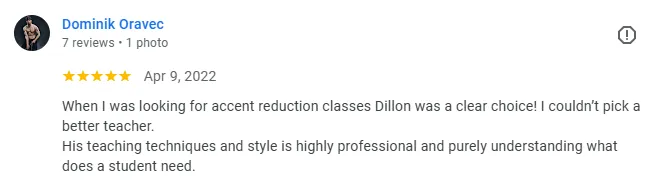
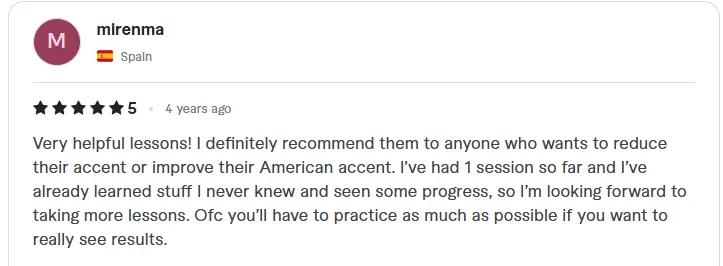
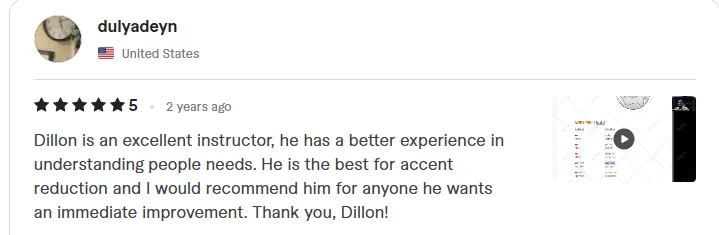
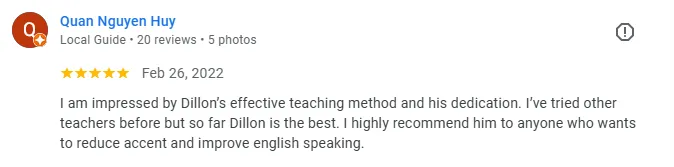
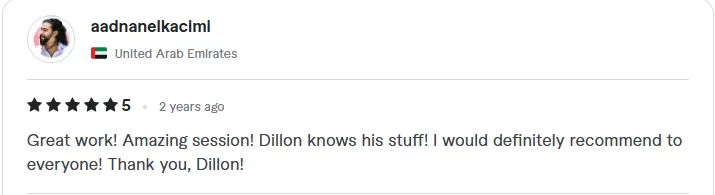
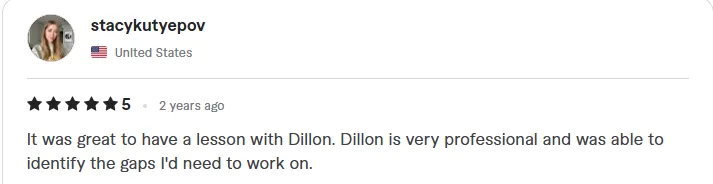
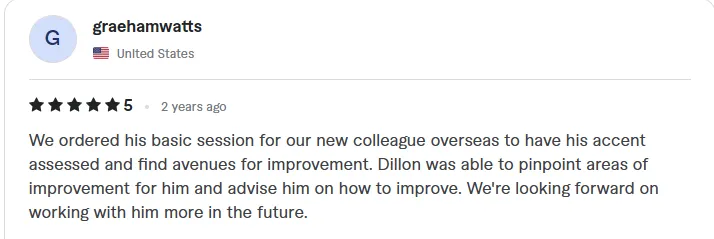
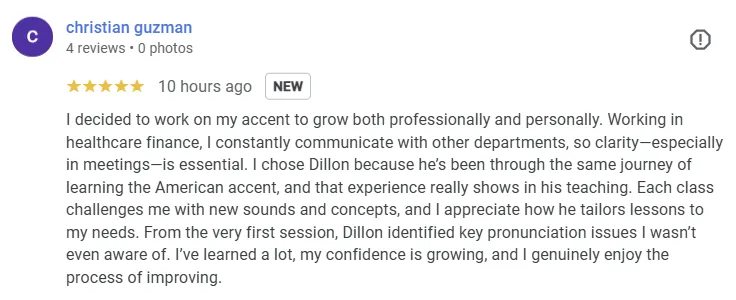
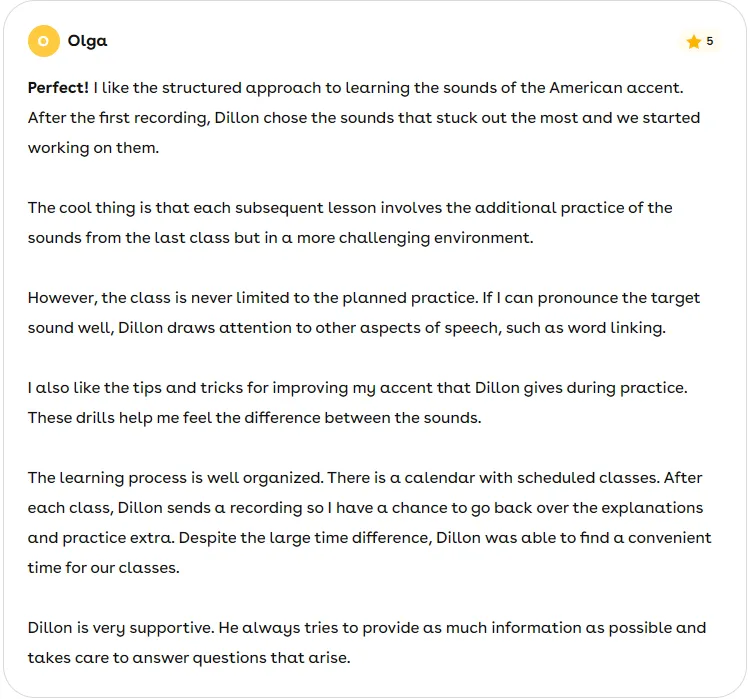
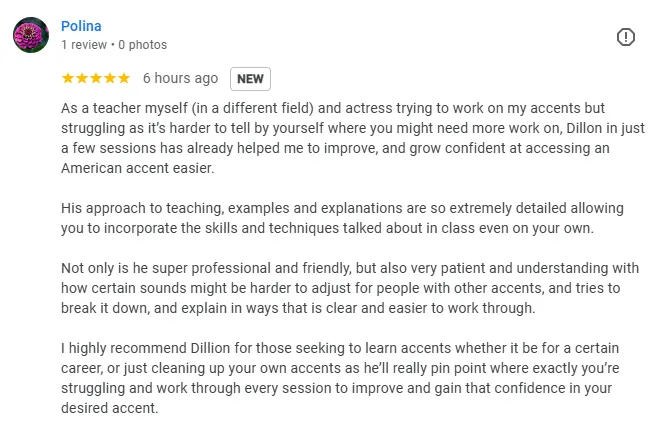
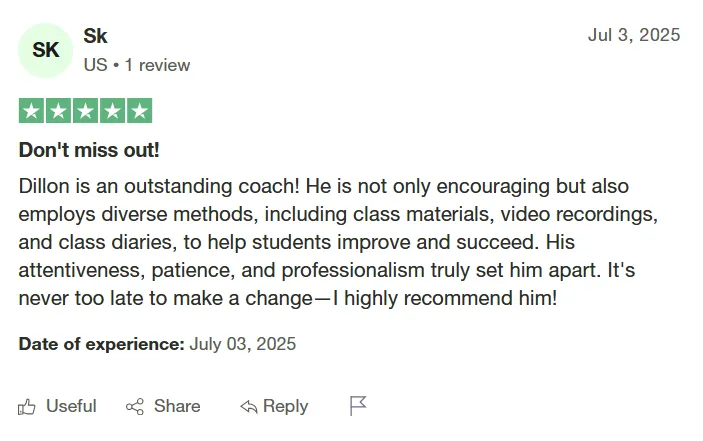
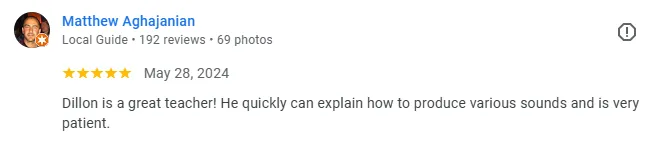
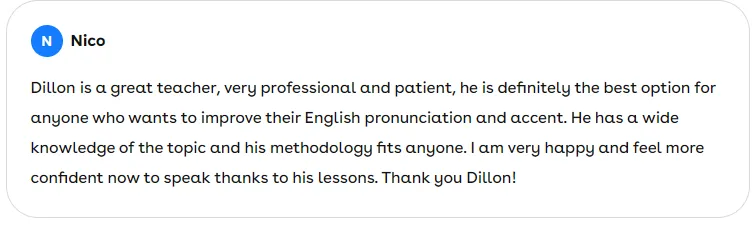
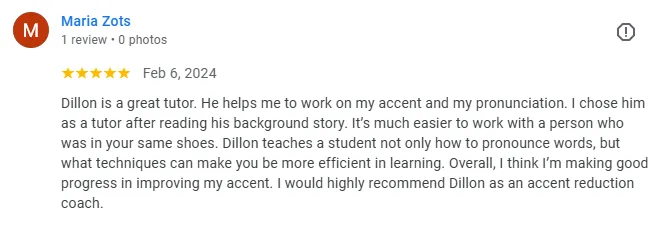
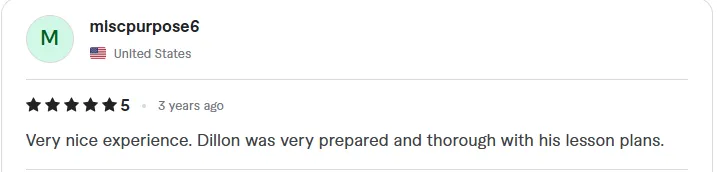
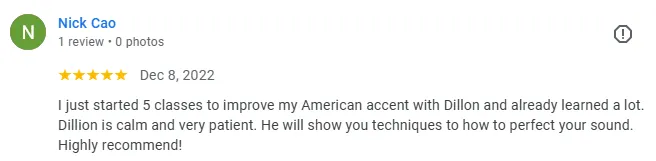
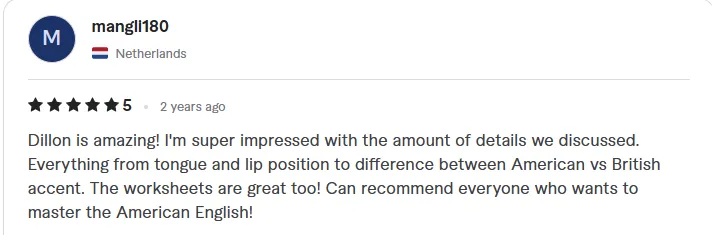
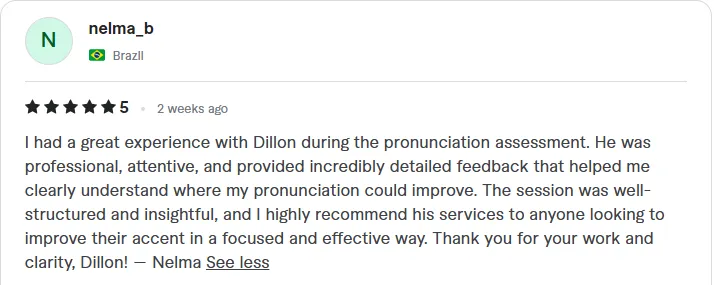
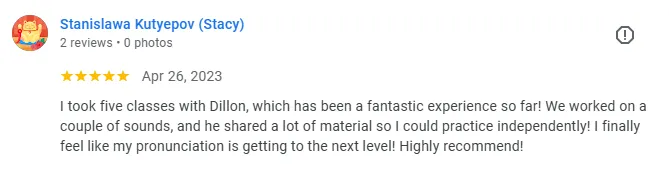
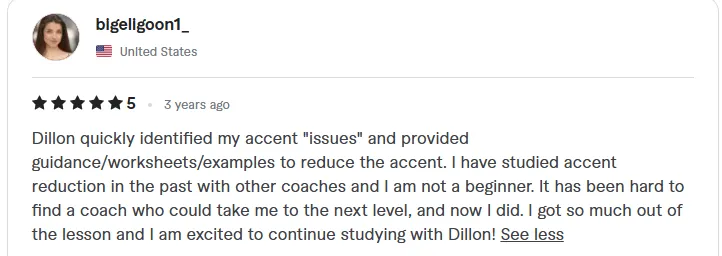
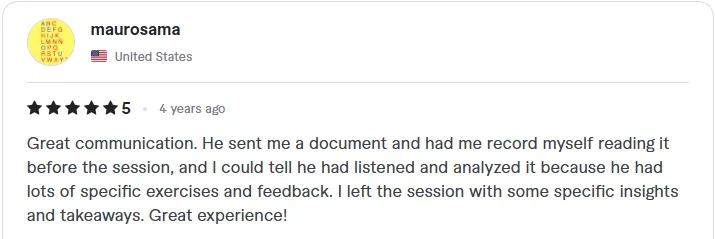
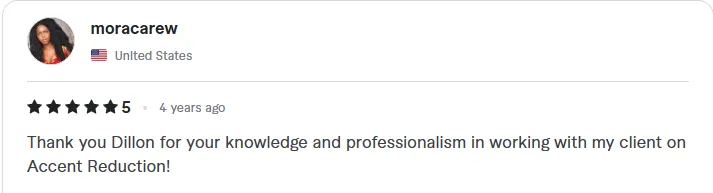
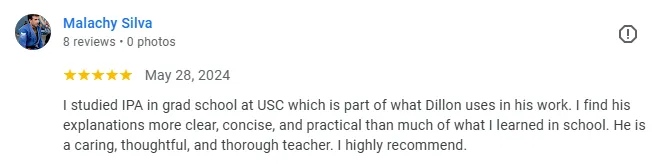
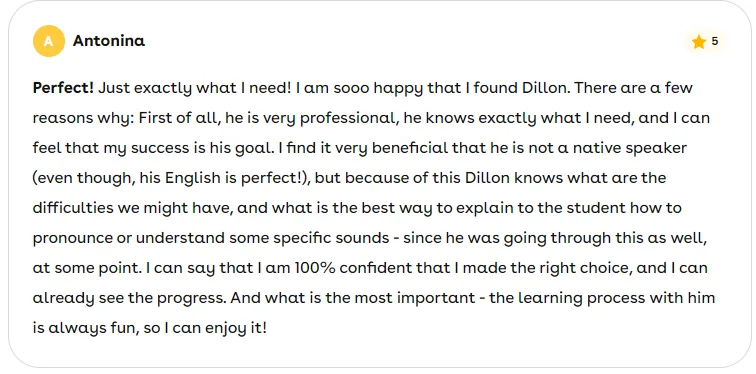
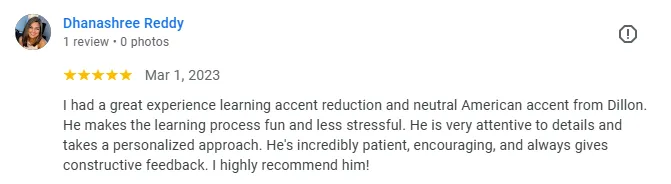
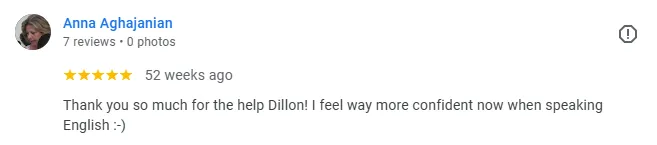
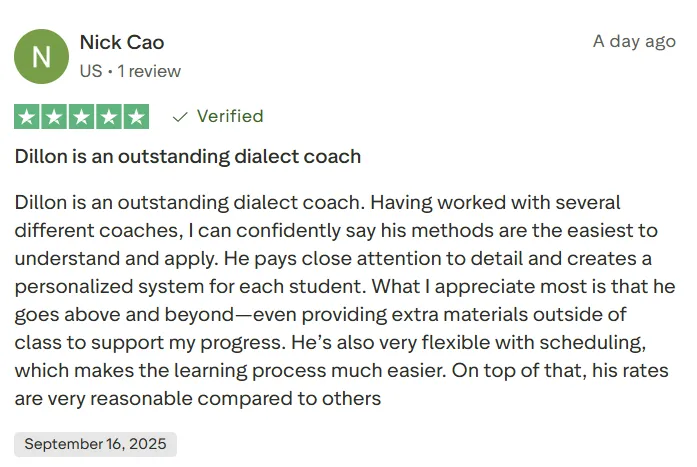
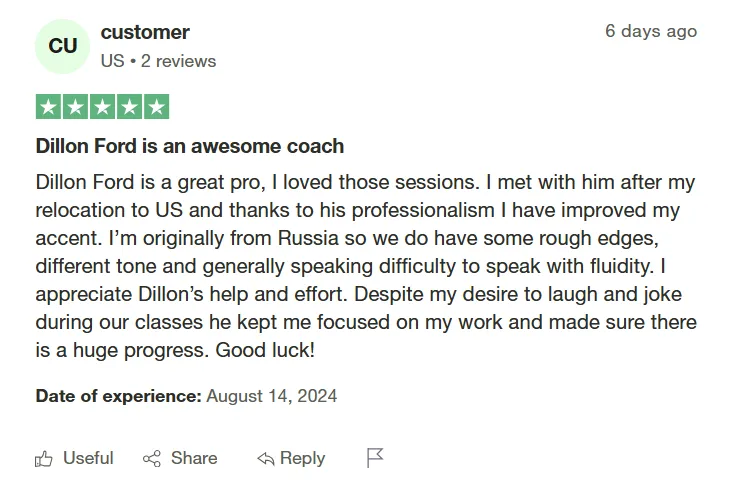
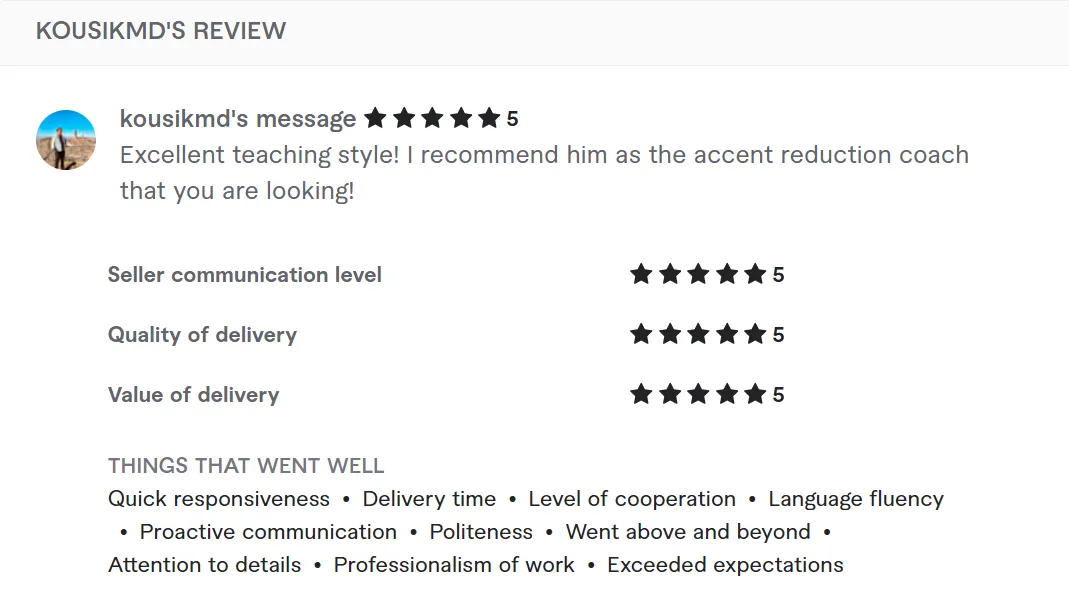
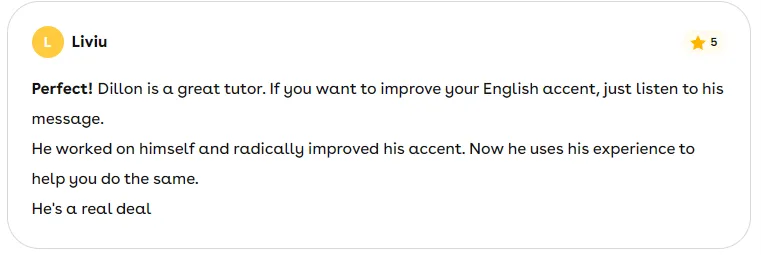
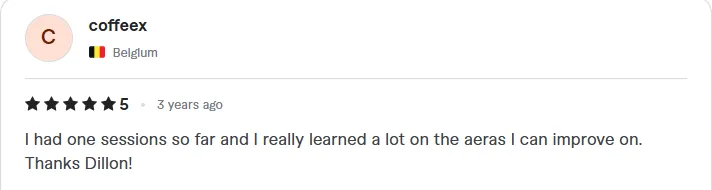
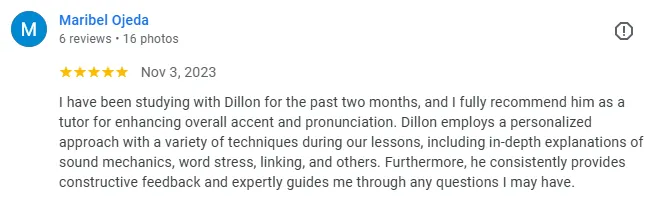
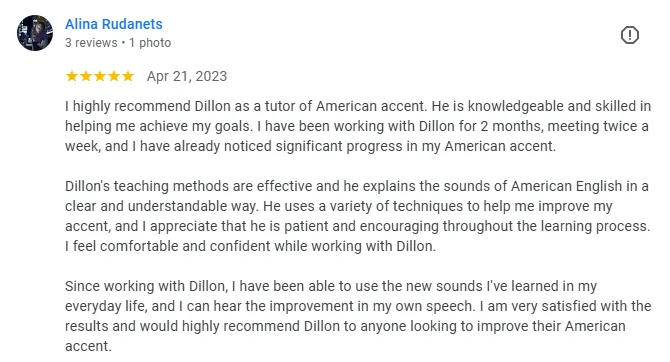
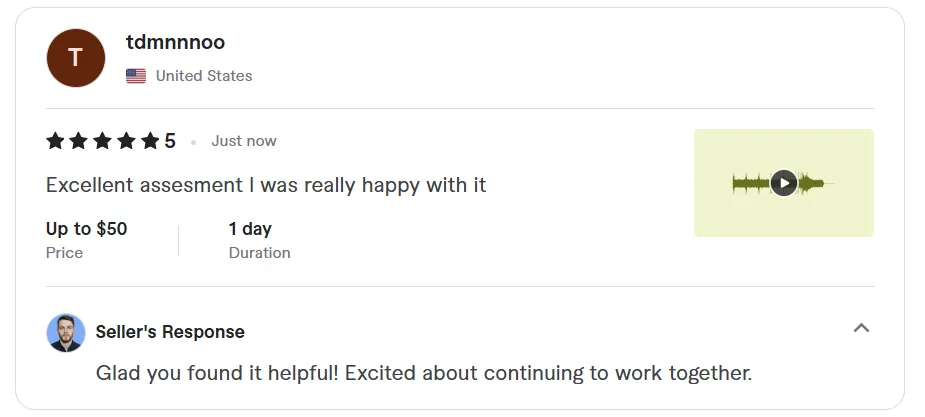
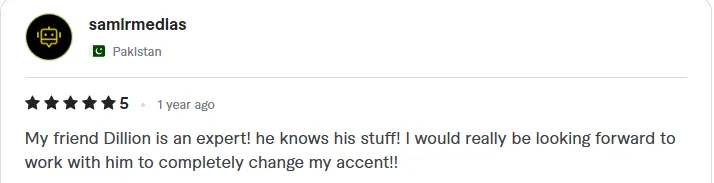
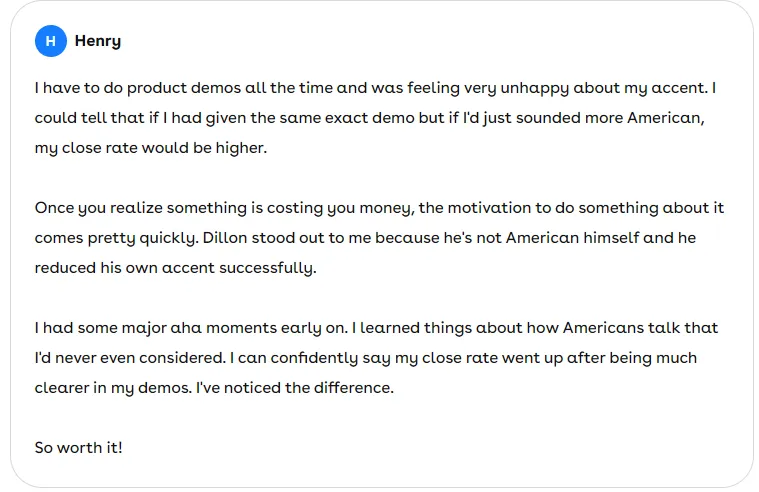
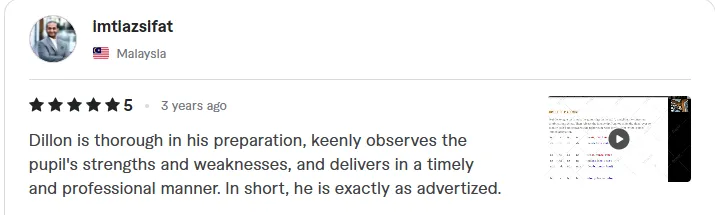
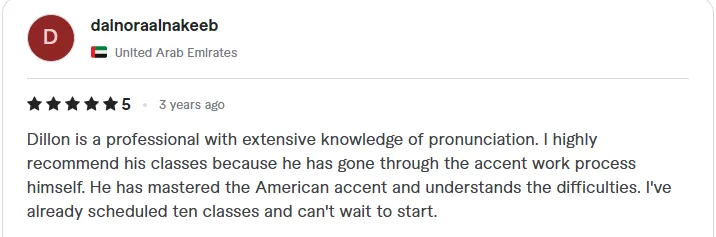
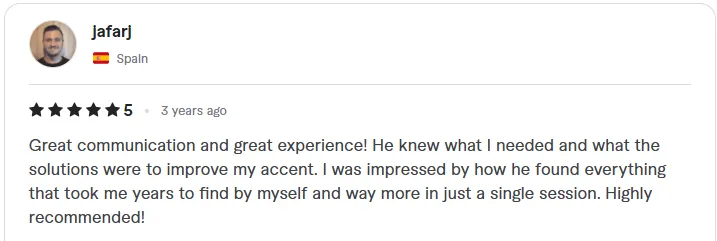
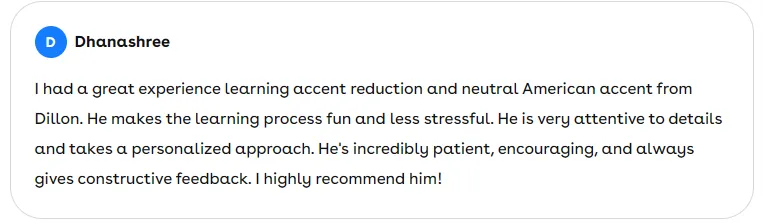
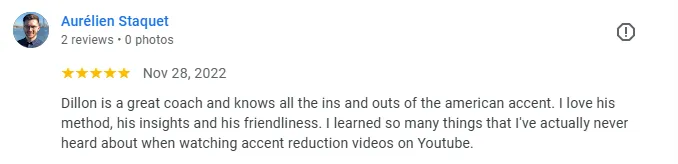
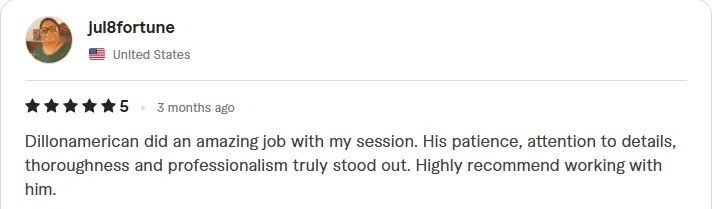
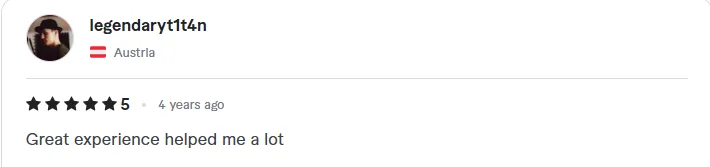
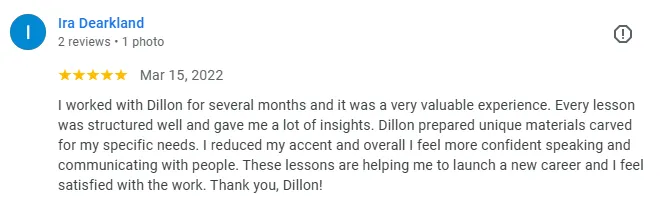
Client Testimonials
Pei
From China
(Project Consultant)
Dominik
from Slovakia
(Freelancer)
Aadi
From India
(Content Agency Owner)
Quan
From Vietnam
(Financial Advisor)
Alena
From Belarus
(Researcher / Student)

Copyrights 2026 | Accent Change by Dialect Work
Terms & Conditions | Privacy Policy
1968 S. Coast Hwy, #5509, Laguna Beach, 92651